The Clean Hands Illusion: The Psychology of Sacrifice, Perception, and Value in Human Relationships
It All Begins Here
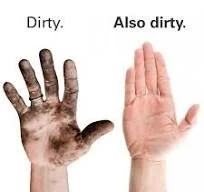
There’s a particular sting that comes from realizing someone you trusted has willingly, sometimes eagerly let you get your hands dirty while they stood off to the side, pristine and unbothered. Whether it’s a friend, a partner, a family member, or a colleague, the betrayal doesn’t always come from an outright act of harm. Sometimes it’s in the silence, the stillness, the carefully maintained distance as you wade into the muck on their behalf. And when the dust settles, they remain polished, untarnished, and most importantly, exempt from blame. But here’s the kicker…most people who find themselves elbow-deep in the mess for someone else didn’t stumble there accidentally. They walked into it, sometimes even volunteered. They wore their loyalty, their selflessness, or maybe just their naiveté as a badge of honor. They believed at least in the beginning that their sacrifice would mean something. That it would be seen, valued, and reciprocated. But more often than not, they are left staring at those metaphorically spotless hands and realizing something deeply uncomfortable: the person they sacrificed for was always okay with letting them get dirty.
This isn’t just about manipulation, though manipulation plays a role. It’s about perception. It’s about how we allow ourselves to be seen and how others choose to see us. Most importantly, it’s about value what people believe you are worth, not just to them, but in the grand scheme of their carefully curated image. At the core of these dynamics lies an unspoken value system. People who allow you to get your hands dirty for their benefit see you as a tool useful, perhaps even necessary, but ultimately replaceable. They may care about you, but they care about themselves more. The act of letting you take the fall, carry the weight, or shoulder the responsibility is not always malicious. Sometimes, it’s survival. But here’s the hard truth: if someone allows you to take the hit, it’s because they’ve already assessed your value and decided that you’re sturdy enough to survive it or, more painfully, that your suffering is an acceptable consequence.
Think about the archetypal “scapegoat” in workplaces, families, or friend groups. They’re often the people who are reliable, who can endure discomfort, and who most importantly …are willing. There’s a twisted admiration that comes with being the person others can lean on, even if they’re leaning in a way that breaks your back. And if you’re someone who’s been cast in this role more than once, it’s worth asking: Why do I keep stepping into this position? Is it loyalty? A fear of confrontation? A deeply ingrained belief that this is what it takes to be loved, respected, or needed? Because here’s the other ugly side of this: some people want to get their hands dirty. Not because they enjoy suffering, but because suffering has become their currency.
There’s a seductive quality to being “the one who takes the fall.” People may not admit it out loud, but there’s often a sense of pride, of quiet superiority, in being the one who “does the hard things” so others don’t have to. But this role comes with a price: resentment. At some point, the pride curdles into bitterness. You start noticing how clean everyone else’s hands are. You notice how easily they let you step forward, how rarely they fight to pull you back, how effortlessly they distance themselves when consequences arise. Psychologically, this dynamic often ties back to self-worth. People who consistently end up in these situations may subconsciously believe that their value lies in what they can do for others, not in who they are. They tether their worth to their usefulness, and in doing so, they make themselves an easy target for people who would rather not get their own hands dirty.
But the martyr role isn’t just about self-sacrifice…it’s about expectation. Somewhere deep down, there’s usually a hope, however faint, that the person you’re protecting will see your sacrifice, appreciate it, and one day return the favor.
Spoiler alert: they rarely do.
Why? Because in their eyes, you’re playing your part. They’ve already categorized you as the person who will step in, who will endure, and who will clean up the mess. And because you’ve proven them right so many times before, they see no reason to challenge that assumption. There’s no betrayal quite like the moment you realize someone you’ve protected won’t protect you in return. It feels personal because it is personal. But it’s also systemic. Most people operate within self-preservation. They will protect their reputation, their comfort, and their image at all costs. And if someone is willing to absorb those costs on their behalf? Even better. This is where expectation becomes dangerous. When you walk into the fire for someone else, you might expect gratitude, loyalty, or reciprocity. But often, what you’ll get instead is indifference or worse, irritation if you start to call attention to the imbalance.
They might say things like:
“No one asked you to do that.”
“Why are you making this such a big deal?”
“You knew what you were signing up for.”
These dismissals sting because they expose an uncomfortable truth: your sacrifice wasn’t seen as noble or admirable. It was seen as expected. So who gets to stay clean? It’s important to note that the people who get to keep their hands clean often hold some sort of power be it social, emotional, or even financial. They might be more charismatic, more well-liked, or simply more skilled at avoiding responsibility. They might be experts at playing the victim or masters of plausible deniability. But what they almost always share is an acute awareness of perception. They understand that staying clean is not just about avoiding blame; it’s about maintaining an image. And here’s where it gets especially messy: People who willingly dirty their hands for others often admire those who stay clean. They might resent them, yes, but they also envy their ability to sidestep accountability, to remain untarnished while chaos unfolds around them. This admiration creates a dangerous cycle. The person getting dirty keeps looking up to the person staying clean, hoping for approval, validation, or even a sliver of gratitude. But approval rarely comes. Why would it? From the clean hands perspective, the system is working just fine.
Eventually, something snaps. Maybe it’s a particularly egregious betrayal. Maybe it’s the realization that the person you’ve been protecting would never do the same for you. Or maybe it’s just exhaustion; pure, bone-deep exhaustion from carrying burdens that were never really yours to begin with.
Walking away from this dynamic requires a brutal level of self-honesty. You have to ask yourself:
Why did I keep showing up for this role?
What was I hoping to gain?
What does it mean about me if I stop volunteering to get my hands dirty?
The answers aren’t always pretty. Sometimes they reveal deep insecurities, unhealthy attachment styles, or fears of rejection and abandonment. But they also offer freedom and the chance to redefine your worth outside of what you can do for others. At their core, people who let others get their hands dirty while they stay clean are operating from a place of self-preservation. That doesn’t mean they’re evil, but it does mean they’re selfish. They’ve made a calculation be it conscious or unconscious that your discomfort is an acceptable trade-off for their peace. But the responsibility doesn’t just lie with them. It also lies with those of us who keep showing up, sleeves rolled up, ready to wade into the mess.
There’s a difference between being selfless and being self-sacrificial. One comes from a place of strength, the other from a place of fear. And until we can honestly examine which side of that line we’re standing on, we’ll keep finding ourselves in the same dirty situations, staring at someone else’s spotless hands, and wondering why we’re the only ones who ever seem to get stained. The truth is, no one will protect you better than you protect yourself. And sometimes, the bravest thing you can do is step back, cross your arms, and let someone else deal with the mess they’ve made.
You’re Not In Love…You’re In Tolerance.
It All Begins Here

There is an adorable lie we tell ourselves when we don’t want to leave. And it sounds so noble. It sounds evolved. It sounds like something you could embroider on a pillow and pass down to your future daughter like a family heirloom of emotional endurance.
“I love unconditionally.”
But what you really mean is: I tolerate what I should never have to. Let me be your big sister for a second the one who loves you enough to risk you being mad at her. I’m going to hold your hand while I say this…
Show me your partner, and I will show you how much you love yourself.
Not what you say about yourself. Not your Being Mary Jane affirmations. Not your journal entries. Not the version of you that posts captions about healing and growth while quietly bleeding out in private and I’m not talking about your menstruation. I’m talking about your real self-worth. The one that shows up in who you allow to touch your life.
Because people don’t rise to meet your potential. They meet your standards. And if your standards are built on “I just want to be loved,” you will accept anything that resembles love long enough to convince yourself that it’s the real thing. Unconditional love is not the absence of boundaries. It is the presence of self-respect.
Let’s be very clear.
You can love someone deeply and still decide they don’t get access to you. You can understand someone’s trauma and still refuse to let it become your responsibility to endure. You can have compassion for someone’s struggles and still recognize that their healing is not supposed to come at the cost of your destruction. But that requires something most people are afraid of more than being hurt: being alone with their own standards.
Because once you decide that love cannot coexist with disrespect, inconsistency, or emotional chaos, your dating pool gets real small, real fast. And suddenly it’s not about whether they choose you. It’s about whether you choose them.
That’s where the panic sets in.
Because now you can’t hide behind “I just love hard.” Now you have to ask yourself why you’re working overtime to keep people who treat you like an option.
Why you’re explaining away behavior that confuses you, exhausts you, and slowly erodes your sense of self.Why you’re calling it unconditional love when it looks a lot like self-abandonment.
Let me say the quiet part out loud:
If someone consistently hurts you and you consistently stay, that is not a testament to your capacity to love. It is a reflection of what you believe you deserve.
And I know that stings. It’s supposed to.
Because somewhere along the way, a lot of us learned that love meant endurance. That if we could just be patient enough, understanding enough, forgiving enough, we could earn the version of someone that only shows up in moments and disappears when it matters.
We learned to romanticize potential and ignore patterns. We learned to call inconsistency “they’re just going through something.” We learned to call emotional unavailability “they’re afraid of getting hurt. We learned to call neglect “they’re busy.” We learned to call disrespect “they didn’t mean it like that.”
At some point, you have to ask yourself: how many translations are you doing just to make someone else’s behavior make sense?
Because healthy love does not require constant interpretation. It does not require you to shrink, to bend, to overextend, to betray yourself just to keep it intact. And here’s the part nobody wants to admit:
Some of you don’t actually want unconditional love.
You want unconditional acceptance of your lack of boundaries. You want to be able to stay without having to confront the fact that staying is a choice. Because if you admit that, then you also have to admit you can leave.
And leaving requires a level of self-trust that you may not have built yet. So instead, you stay and call it loyalty. You stay and call it patience. You stay and call it unconditional love. But real love, healthy love, grown love, has conditions. Not conditions that control another person, but conditions that protect you.
Conditions like:
I will not stay where I am disrespected.
I will not stay where I am confused more than I am at peace.
I will not stay where I have to convince someone to treat me like I matter.
I will not stay where my needs are an inconvenience.
I will not stay where I am slowly disappearing.
Those are not ultimatums. Those are standards. And standards are what separate love from self-neglect. Because the truth is, the person you’re with is not just your partner. They are a mirror. They reflect what you tolerate, what you prioritize, what you excuse, and what you believe you’re worth.
So if you’re constantly feeling anxious, overlooked, disrespected, or emotionally drained, that mirror is trying to show you something. Not just about them. About you. About where you are still choosing comfort over clarity.
Familiar pain over unfamiliar peace. Potential over reality. You don’t need to love people less.You need to stop loving yourself last. Because the moment you truly, deeply understand your value, your tolerance for certain behaviors will disappear without you having to force it.
You won’t have to beg for better. You’ll require it. And if it’s not met, you’ll leave—not because you don’t love them, but because you finally love yourself more. So yes.
Show me your partner…And I’ll show you exactly how much you believe you deserve.
If that realization makes you uncomfortable, good.
That discomfort is not here to shame you.
It’s here to wake you up.
Outgrowing A Life That No Longer Fits
It All Begins Here

A strange grief comes with realizing you’ve outgrown your own life. It’s not loud or violent and it doesn’t announce itself with sirens or demand immediate action. Instead, it settles in your chest heavy and unyielding like wet cement. You feel it when you wake up and stare at the ceiling before your feet touch the floor. You feel it when you’re surrounded by friends you’ve known for years laughing at jokes that stopped being funny to you a long time ago. You feel it when you look at a partner, a job, or a belief system you’ve clung to, and the silence between you stretches wide and unbridgeable. It’s not anger or sadness. It’s stagnation. And stagnation when prolonged, can start to feel a lot like dying while still breathing.
We are creatures of habit (I know I am), tethered to our identities by invisible threads spun from history, expectation, and loyalty. The friendships we’ve had since high school, the family roles we’ve played since childhood, the careers we’ve fought tooth and nail to build…all of these become part of the story we tell ourselves about who we are. And the thought of walking away from those cornerstones, even when they no longer serve us oddly feels like betrayal.
But what happens when the life we’ve built feels like a cage? When the love we’ve been loyal to feels like a chain? When the job that once inspired us now feels like an anchor pulling us deeper into a sea of monotony? There’s an inherent guilt in outgrowing something or someone that once felt essential. It feels ungrateful and almost cruel. How dare you outgrow the friends who were there for you during your darkest days? How dare you admit that the dream career you worked so hard for is now just a paycheck and a series of tasks you perform with robotic efficiency? How dare you question a relationship where love still exists but growth has long since stopped?
The weight of these unspoken expectations can be paralyzing. Obligation becomes both a comfort and a prison. You tell yourself that this is just how life is. Everyone feels this way sometimes. But deep down you know the difference between fleeting dissatisfaction and soul-deep misalignment. You know when something is no longer a season but a sentence. Staying in spaces you’ve outgrown isn’t just about feeling uncomfortable. It’s about the slow erosion of your spirit. You start to shrink yourself to fit back into the mold that once held you. You silence your voice and stifle your curiosity and dull your ambition. You become adept at lying to yourself: It’s fine. I’m fine. This is fine.
But it’s not fine.
When you stay in friendships out of habit instead of connection, you begin to resent the people you once cherished. When you stay in a career that no longer aligns with your values, you start to question your competence and lose sight of your worth. When you stay in a relationship out of fear of loneliness or societal judgment, you sacrifice pieces of yourself until you’re unrecognizable.
The psychological toll of this self-abandonment manifests in insidious ways: chronic fatigue, a lack of enthusiasm, irritability, and a gnawing sense of sadness that doesn’t go away, no matter how much you distract yourself. It’s not as easy as dissatisfaction. It’s worse. It’s disconnection from others and from your purpose and worst of all… from yourself.
Worse still is the internalized shame. You berate yourself for not being grateful enough, strong enough, or brave enough to either make peace with your current reality or leave it altogether. You start to believe that your unhappiness is a personal failing rather than a natural consequence of being in a space that no longer fits.
Perhaps the most jarring realization isn’t just that you’ve outgrown your circumstances but that you’ve also outgrown yourself. The version of you who said yes to these friendships, this career, this partner, this belief system is gone. You’re holding onto choices made by a past self who didn’t have the information, the perspective, or the growth you now possess. It’s deeply uncomfortable to admit this. Because once you do, you realize that the only way forward is to dismantle parts of your life that you’ve built your identity around. You have to let go of who you were to make space for who you’re becoming.
This process isn’t glamorous or Zen. It’s damn sure not a montage set to an inspiring soundtrack. It’s messy and lonely and often terrifying. It’s long nights staring at the ceiling, questioning everything. It’s conversations with people who won’t understand why you’re changing and will resent you for it. It’s moments of aching loneliness where you wonder if leaving was a mistake. But it’s also liberating. Because the truth is, when you’ve outgrown your life, staying still is far more dangerous than leaping into the unknown. One of the biggest reasons we stay in lives we’ve outgrown is the fear of starting over. What if I leave and it’s worse? What if I never find friends who understand me the way these ones do? What if I leave my relationship and realize I’ll never be loved like this again? What if I quit my job and fail spectacularly?
Fear is as seductive as it is persuasive. It convinces us that discomfort is safer than uncertainty. It tells us that the devil we know is better than the one we don’t. But fear rarely tells the whole truth.
The truth is, staying in spaces that shrink you doesn’t protect you from failure or loneliness or regret but it absolutely guarantees them. Because every day you stay stuck, you’re choosing a slow death over a painful rebirth. Starting over is undeniably hard. It’s uncomfortable and disorienting. But it’s also the birthplace of possibility.
When you’ve outgrown your life, the question isn’t just, What do I need to leave behind? It’s also, Who do I want to become? This question is terrifying because it forces you to confront the blank page of your future. There’s no script, no roadmap, no guarantee of success. But there is freedom. There’s the chance to build a life that fits the person you are now, not the person you used to be. Maybe it means finding new friendships with people who align with your current values. Maybe it means going back to school or changing careers entirely. Maybe it means leaving a marriage or a relationship that feels like a hollow shell. Maybe it means questioning beliefs you’ve held your entire life and letting yourself evolve into someone who thinks and feels differently. The answers aren’t immediate, and they aren’t easy. But they are necessary.
Growth always costs something. You’ll lose people. You’ll lose stability. You’ll lose the version of yourself who felt safe, even if they weren’t happy. But staying still costs something, too. It costs your peace. Your authenticity. Your aliveness. At some point, you have to decide which price you’re willing to pay. Choosing growth doesn’t mean you’ll never feel doubt or regret. There will be days when the loneliness feels unbearable, when you miss the comfort of familiarity, when you question every choice you’ve made. But there will also be days when you catch a glimpse of your true self in the mirror, and realize you can breathe again.
Outgrowing your life isn’t a betrayal even though it will absolutely feel like it. It’s a natural evolution. It’s the sign of a person who is still alive, still curious, still striving for something better. And while the process of letting go is deeply painful, it’s also deeply necessary.
You deserve a life that fits you now where you’re at and not the version of you from ten years ago, not the version of you other people prefer, but you as you are now. So let the friendships fade, let the career shift, let the relationship end, let the belief evolve. Grieve what was, honor what it gave you, and then turn toward what could be. Because you are not meant to shrink yourself to fit into spaces you’ve outgrown. You are meant to expand, to stretch, to break open and rebuild. You are meant to become.
Pizza Hut
It All Begins Here

There was something almost impressive about how quickly humiliation turned into marketing. A leaked voice note. A man in the middle. Two women positioned like opposing teams in a game neither of them designed. And within a few news cycles, we were no longer talking about the man at all. We were debating character. Decorum. Girl code. One woman became a cautionary tale. The other became a brand. Watching Summer Walker turn what should have been a quiet, embarrassing exposure about asking her affair partner to buy her a phone and save her number as “Pizza Hut” so his fiance wouldn’t find out
into a Pizza Hut sponsorship with a delightfully petty commercial didn’t shock me. What did was how quickly the conversation settled exactly where it always does. She was labeled. Reduced. Diagnosed. “Still a bird.” “No self respect.” “Desperate.” The language came easily, like it had been waiting.
And yet, we live in a culture that builds monuments out of women who stay.
We canonized Beyoncé for making lemonade out of lemons. We treat betrayal, when it’s wrapped in marriage, like a spiritual test. We call it endurance. Growth. Depth. We give it poetry. We give it grace. We give it time to be understood. But let a woman opt into a man who is already spoken for without the ceremony, without the illusion, without pretending she’s the only one, and suddenly all that nuance disappears. She becomes the disruption. The moral failure. The easy answer.
The wrong person is always on trial.
I know that because I’ve been every woman in this story. I’ve been the girlfriend who held it down…Cheated on. The wife who tried to make it work. Cheated on. I’ve ridden and died and oh look…he cheated on my corpse. The partner who convinced herself she was “evolving” by loosening expectations. Still cheated on. And for a time, I was the woman you warn your friends about. Not by accident. Not confused. Not under some spell. Fully and completely aware of the role, the optics, and more importantly, the man.
The first time I knew I was being cheated on, I didn’t know it because I caught him although I eventually did. (Hey Junebug) I knew it because my body did. That quiet, inconvenient knowing that lives in your gut and refuses to be reasoned with. I argued with it anyway. Rearranged facts in his favor. Filed away inconsistencies like they were clerical errors instead of evidence. The late nights made sense if I didn’t look at them too long and didn’t wait up. The stories almost held if I didn’t ask follow up questions. Friends who couldn’t meet my eyes were just… tired and distracted I told myself.
I did not want two plus two to equal four. When I finally got proof, I got the expected devastation. But I also felt relief. Not joy, nothing that clean, but the kind of relief that comes when something you’ve been bracing for finally arrives. Like the end of a long illness. The suffering stops, but it leaves behind something uncomfortable: confirmation.
And then came the guilt.
Not his. Mine.
Because even with evidence in my hands, I found a way to make his betrayal about my loyalty. Leaving felt cruel. Like I was abandoning him mid transformation. Like this was the moment he needed me to be patient, to be understanding, to help him become the man he had been promising me he was on his way to being. What he had actually done was show me, clearly and repeatedly, that I was optional. This is the part we don’t interrogate when we talk about “strong women.” The quiet, contorted logic it takes to stay. The mental gymnastics required to turn betrayal into a project you are responsible for seeing through. We celebrate the woman who endures. Who makes it work. Who transforms disrespect into a testimony. We hand her language that makes staying sound noble, healing, growth, choosing love.
We do not ask what she is choosing to stay inside of.
And we are far less generous with the woman who refuses that performance altogether. The side chick is easy to condemn because she disrupts the illusion. She does not require the story to be clean. She is not pretending exclusivity where there is none. She removes the dignity of denial, and for that alone, she is assigned a kind of moral deficiency that feels, at times, disproportionate to the actual crime. The assumption is that she must lack something, self esteem, standards, sense, because she agrees to be a part time presence in a man’s life.
But what if what she lacks is the need to lie to herself?
During my time on that side of things, what struck me wasn’t just the deception. It was how seamless it was. Men who spoke about their partners with reverence could, within the same hour, construct entirely separate realities. The same voice that said “I love you” could also say “I’m on my way home” while making no move to leave.
It is difficult to romanticize love when you watch it being performed.
There is a very specific kind of intimacy in overhearing the woman on the other end of the phone. Her careful tone. The softness. The quiet plea disguised as casual conversation. “Remember you said you’d…” trailing off into hope. You can hear the effort to keep things calm, to not push too hard, to not say the thing she already knows.
And then the call ends. And the man turns back to you. Present. Attentive. Unbothered. What I felt in those moments was not pride. It was clarity.
Clarity about how little proximity guarantees you. Clarity about how easily devotion can be mimicked. Clarity about how much of what we call love is, in practice, negotiation. Or endurance. Or denial dressed up in something softer. And that is when the hierarchy starts to fall apart. Because the women I once identified with, the girlfriends, the wives, were often working just as hard to maintain a version of reality that allowed them to stay. Ignoring patterns. Reframing inconsistencies. Accepting apologies that came wrapped in gifts, access, temporary transparency. Shared locations. Passwords. Grand gestures that functioned less as accountability and more as reassurance.
Reassurance that the performance would continue.
Which brings me back to the question that keeps getting buried under all the noise: Where is the man in all of this? Even in the specifics, the leaked voice note to Rich the Kid, the back and forth with Tory Brixx, the most jarring detail wasn’t the exposure. It was the admission. A woman essentially saying: I’m not leaving. Do what you’re going to do, just manage it better. Let the cheating happen in peace. And the response was mockery and veiled as concern and clarity about positioning.
She was desperate. The other woman was reckless. Two women flattened into roles, one to be pitied, one to be punished, while the man they were both orbiting remained largely intact. Untouched. Uninterrogated. So I find myself asking a question that feels almost impolite in its simplicity: What is the reward? What is being won by staying with someone who betrays you and then redirecting your anger toward the woman he involved? Is this a matter of sequence, deal with her first, him later? Or is it something harder to admit, that both roles, the wife and the side chick, are simply different negotiations with the same behavior?
Because from where I’ve stood, in every position available to a woman in this dynamic, the math does not change. The apologies come.
The gestures follow.
Flowers. Bags. Shared locations. Passwords. Access dressed up as accountability. And still, somehow, the behavior persists.
Still, somehow, the focus shifts.
Still, somehow, the man becomes secondary in a story he authored.
So again: why is the side chick the villain?
Why is she assumed to lack self worth for accepting a fraction of a man, while the woman accepting his full capacity for betrayal is praised for her strength? Is endurance inherently more honorable than awareness? Is denial more respectable than participation? Or are both, in their own ways, adaptations to the same imbalance? We have built an entire moral framework around how women respond to men’s behavior, and very little around the behavior itself. And so the cycle continues.
The man remains. The girlfriend stays. The side chick is dismissed. And the story resets. At some point, the performance stops being about love. And starts being about who is willing to endure the most to keep calling it that.